
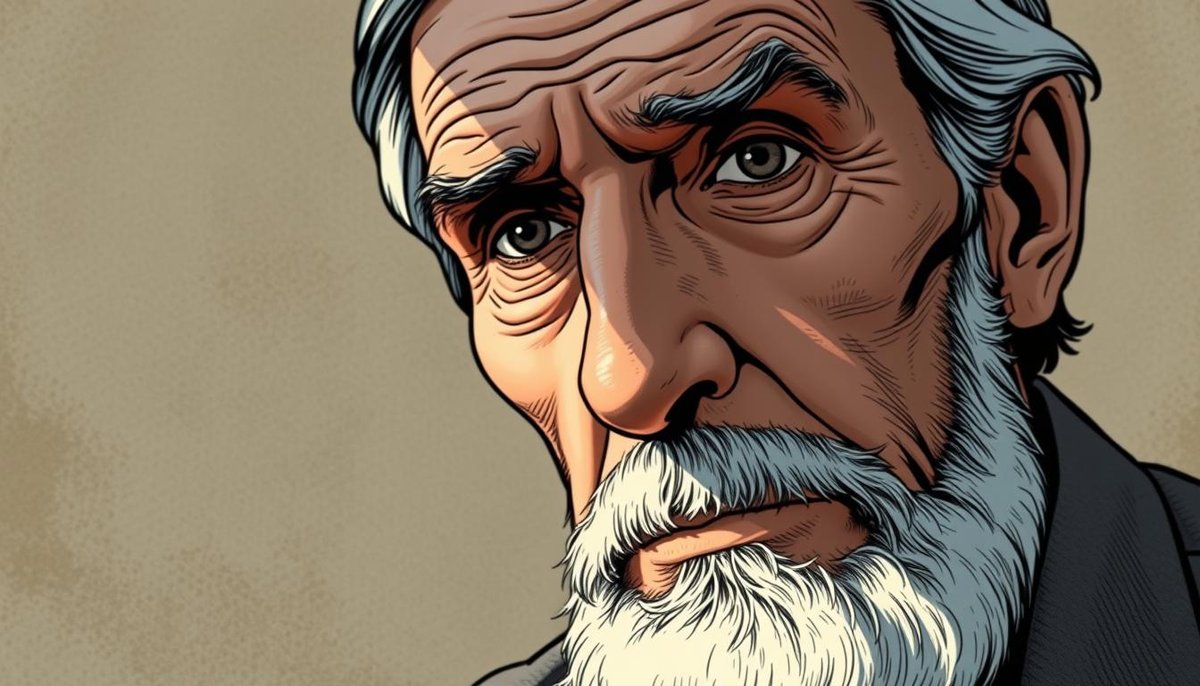
Carl Jung: 60 Inspirational Quotes from His Books
Have you ever wondered how the words of a thinker can deeply touch your lifeCarl Jung, the father of analytical psychology, left a legacy that continues to inspire millions around the world.
Your thoughts on the collective unconscious and the journey of self-discovery are more relevant than ever.
In this article, we have compiled 60 memorable quotes from his books, organized into tables for easy reference. Each quote is a window into the existence human, offering insights that can transform the way you see yourself and the world around you.
Get ready to embark on a journey of reflection and discovery. Jung's words have the power to illuminate paths and inspire profound change. Shall we explore them together?
Who was Carl Jung?
Learning about the history of one of the greatest thinkers can transform your view of mind human. Carl Gustav Jung, born in 1875 in Switzerland, was a psychiatrist visionary whose ideas revolutionized the psychology.

His intellectual journey began with his medical training and evolved into the creation of analytical psychology.
The life and legacy of the founder of analytical psychology
From an early age, Jung was influenced by his family, especially his grandfather, a theologian who believed in communicating with spirits.
This influence shaped his interest in the unconscious and psychic phenomena. In 1904, he developed the word association test, a milestone in psychiatric diagnosis.
As head of the Burghölzli Psychiatric Clinic, Jung furthered his studies and collaborated with Eugen Bleuler. His career was marked by lasting contributions, such as the introduction of archetypes and the collective unconscious.
Jung and Freud: a partnership that changed psychology
The partnership between Jung and Sigmund Freud began in 1907 and was fundamental to the development of psychoanalysis. Freud saw Jung as his “heir,” but theoretical differences, especially regarding the nature of the unconscious, led to a breakup in 1914.
While Freud focused on the individual unconscious, Jung advocated the collective unconscious, an idea that revolutionized psychology. This separation marked the beginning of a new phase in Jung's career, consolidating his reputation as one of the greatest thinkers of the 20th century.
| Event | Details |
|---|---|
| Birth | July 26, 1875, in Kesswil, Switzerland |
| Training | Medicine at the University of Basel (1895–1900) |
| Career | Head of the Burghölzli Psychiatric Clinic (1905–1909) |
| Major Works | “Psychological Types (1921), Man and His Symbols (1964) |
The revolutionary thinking of Carl Jung
Discover how profound concepts can transform your view of the world and yourself. The ideas of one of the greatest thinkers of the 20th century continue to influence psychology and self-awareness.
His unique approach to the human mind offers valuable insights for those seeking to understand their own existence.
The collective unconscious and archetypes
O collective unconscious It is one of the most revolutionary ideas. It represents a universal psychic heritage shared by all humanity. This ancestral memory is formed by symbols and patterns that are repeated in different cultures and eras.
Within this concept, the archetypes play a fundamental role. They are models of behavior and thinking that shape our perception of the world.
Among the main archetypes are the Persona, the Shadow, the Anima/Animus, and the Self. Each of them reflects different aspects of the human psyche.
The journey of individuation
A individuation is the process of integrating the conscious and the unconscious. It is a journey of self-discovery that seeks psychic wholeness. Through it, you can discover your true I and achieve a state of inner balance.
This path involves recognizing and accepting different parts of yourself, including those that are often denied. Individuation is not just a theoretical concept, but a practice that can transform your awareness and your life.
Quotes about Dreams and the Unconscious
The dreams are windows to the unconscious, revealing deep secrets of our mind. They connect us with hidden aspects of our psyche, offering valuable insights for self-knowledge.
In this section, we explore how dreams can be a bridge to understanding the content the unconscious and its relationship with psychology.
The Collective Unconscious
O collective unconscious is a psychic heritage shared by all humanity. It manifests itself in dreams through universal symbols and archetypes. These primordial images appear in different cultures and eras, revealing common patterns of human experience.
The Language of Dreams
Dreams speak a symbolic language, full of metaphors and hidden meanings. They can reveal internal conflicts, repressed desires, and even premonitions.
Dream interpretation is a powerful tool in therapy, helping to uncover the content of the unconscious.
Dreams as a path to self-knowledge
Through dreams, you can discover unknown aspects of yourself. They are a journey toward self-knowledge, helping to integrate the conscious and the unconscious. This practice can transform your awareness and bring emotional balance.
| Sentence | Source |
|---|---|
| “Dreams are the unadulterated manifestations of unconscious creative activity.” | “Memoirs, Dreams, and Reflections (1961) |
| “A dream is a narrow door, hidden in the darkest and most intimate part of the soul.” | “Memoirs, Dreams, and Reflections (1961) |
| “Within each of us there is another person we do not know. He speaks to us through our dreams.” | Carl Jung |
| “Dreams are a creative manifestation of the psyche, involving both the conscious and unconscious mind.” | Carl Jung |
| “The symbolic language of dreams can reveal personality issues.” | Carl Jung |
| “Archetypes are primordial images present in the collective unconscious.” | “Archetypes and the Collective Unconscious” (1934) |
| “Dreams can indicate physical and mental health problems.” | Carl Jung |
| “The psyche and matter are aspects of a single whole.” | Carl Jung |
| “Know all the theories, master all the techniques, but when touching a human soul, be just another human soul.” | Carl Jung |
| “Only what we truly are has the power to heal us.” | Carl Jung |
Quotes about Analytical Psychology
A analytical psychology offers powerful tools for understanding the complexity of the human mind. Through concepts such as Persona, the Shadow, and archetypes Anima e Animus, you can explore deep layers of your psyche.
These elements help us understand how we relate to the world and to ourselves.
The Shadow and the Persona
A Persona is the mask we wear to present ourselves to the world. It represents what we want others to see, but it does not always reflect who we truly are. Integrating the Shadow, on the other hand, is an essential step in the journey of self-discovery.
The Shadow contains denied or repressed aspects of our personality.
Recognizing and accepting the Shadow can be challenging, but it is essential for achieving psychic wholeness. As Jung said:
“Human nature is not made up solely of pure light, but also of many shadows.”
Anima and Animus
The archetypes Anima e Animus represent the feminine and masculine energies present in all of us. They influence our interpersonal relationships and how we connect with the world. Integrating these aspects is crucial for emotional balance.
Jung pointed out:
“In his choice of love, a man is tempted to win over the woman who best corresponds to his own unconscious femininity.”
This dynamic reveals how we project our archetypes onto relationships.
| Sentence | Source |
|---|---|
| “Everyone has something of the criminal, the genius, and the saint within them.” | “The Self and the Unconscious” (1928) |
| “Only what we truly are has the power to heal us.” | “The Self and the Unconscious” (1928) |
| “It is impossible to arrive at an approximate awareness of oneself.” | “The Self and the Unconscious” (1928) |
| “Right action comes from right thinking.” | “The Self and the Unconscious” (1928) |
| “The world exists because its opposites are kept in balance.” | “Archetypes and the Collective Unconscious” (1934) |
| “There is no conscious content that is not unconscious in another respect.” | “The Nature of the Psyche” (1947) |
| “Just as there is a passion that longs for a blind life without barriers, there is also a passion that would like to sacrifice everything to the spirit.” | “The Nature of the Psyche” (1947) |
| “The best political, social, and spiritual work we can do is to stop projecting our shadows onto others.” | Attributed to Jung |
Quotes about Life and Existence
Reflect on the meaning of life can open doors to a deeper understanding of yourself. The Jungian view of existence invites us to explore the connection between our personal journey and the collective unconscious.
This approach helps us find meaning amid crises and seek fulfillment through self-knowledge.
An existential crisis is often the starting point for the process of individuation. It is at this moment that we are called upon to integrate conscious and unconscious aspects of our psyche.
This integration allows us to live more authentically and in alignment with our spiritual values.
In contemporary society, the search for meaning can be challenging. The Jungian perspective reminds us of the importance of looking inward, recognizing that self-knowledge is the key to a existence full. As the thinker said:
“Until you make the unconscious conscious, it will direct your life and you will call it fate.”
This quote, taken from The Red Book, highlights the importance of understanding the content from the unconscious to take control of our own journey.
| Sentence | Source |
|---|---|
| “Everything that irritates us about others can lead us to an understanding of ourselves.” | “Present and Future” (1957) |
| “Where love reigns, there is no desire for power; and where power prevails, there is a lack of love.” | “Civilization in Transition (1958) |
| “The function of dreams is to try to reestablish our psychological balance.” | “The Red Book (2009) |
| “Man needs a symbolic life.” | “Present and Future” (1957) |
| “Your vision will become clear only when you look into your own heart.” | Attributed to Jung |
To deepen your journey of self-discovery, explore more about how Jung's ideas can transform your life in our website.
Quotes about Love and Relationships
Love and relationships are themes that deeply touch the human soul, revealing essential aspects of our psyche. The Jungian view on these themes invites us to explore how archetypes influence our emotional connections.
When we fall in love, we often project onto the other person the idealized image of our animate or animus. This projection can be a path to self-knowledge, but also a challenge to building healthy relationships.

The process of individuation is essential for us to relate authentically. It helps us integrate conscious and unconscious aspects, allowing love to be a true and transformative experience.
As the thinker said:
“The meeting of two personalities is like the contact of two chemical substances: if there is any reaction, both are transformed.”
This quote, taken from Marriage as a Psychological Relationship, highlights the dynamic and transformative nature of love.
| Sentence | Source |
|---|---|
| “True love is a sacrifice. We sacrifice our possibilities, or rather, the illusion of our possibilities.” | “About Love” |
| “Love does not mix with power, so relationships where one wants to possess the other, wants to be in charge, have control, in short, where some power relationship is established, there is no love.” | “About Love” |
| “We can only develop fully when we develop both our individuality and our ability to relate to others.” | “About Love” |
| “Projection is when you fall in love, you project onto the other person the ideal man/woman you would like to have.” | “About Love” |
| “The ego is endowed with a power, a creative force, a late conquest of humanity, which we call will.” | “The Development of Personality” (1934) |
Quotes about Spirituality and Religion
A spirituality and the religion are fundamental pillars for understanding the depth of the human psyche. They connect us with the collective unconscious, revealing symbols and patterns that transcend cultures and eras.
Through the analysis of religious symbols, we can explore how mythologies reflect the archetypes universal. These elements help us understand each individual's spiritual journey and their search for meaning.
In the therapeutic process, the spirituality plays a transformative role. It offers a path to integrate conscious and unconscious aspects, promoting emotional balance and inner healing.
As the thinker said:
“The soul cannot exist without its other side, which is always found in a ‘you’.”
This quote, taken from The Complete Works of Carl Gustav Jung, highlights the importance of spiritual connection for psychic wholeness.
| Sentence | Source |
|---|---|
| “It does not matter what the world thinks of religious experience: those who have it possess, as an invaluable treasure, something that has become for them a source of life, meaning, and beauty, giving new splendor to the world and to humanity.” | Carl Jung |
| “Among all my patients over the age of thirty-five, there is no one whose problem was not religious reconnection. The root of everyone's illness lies in having lost what religion has given its believers throughout the ages; and no one is truly healed until they have regained their religious focus.” | Carl Jung |
| “Whether invited or not, God will be present.” | Carl Jung |
| “Your thoughts can lead you to the hell of depression, or to the paradise of happiness!” | Ruan Guimar |
| “Where love reigns, there is no desire for power; and where power prevails, there is a lack of love.” | “Memories, Dreams, Reflections (1961) |
Quotes about the Human Mind
A mind Humanity is a universe of possibilities, where the conscious and the unconscious are intertwined. Understanding this dynamic is essential to exploring the depths of our psyche and discovering how it influences our actions and thoughts.
Conscious vs. Unconscious
O conscious represents everything we perceive and recognize in our daily lives. The unconscious holds memories, desires, and emotions that are not always accessible. This duality is fundamental to understanding how our mind It works.
On analytical psychology, the integration of these two aspects is seen as a path to self-knowledge. As one thinker said:
“Until you make the unconscious conscious, it will direct your life and you will call it fate.”
The Power of Imagination
A imagination is a bridge between the conscious and the unconscious. Through it, we can access symbols and archetypes that reveal deep aspects of our psyche. This creative ability is essential for resolving internal conflicts.
In therapy, techniques of active imagination are used to explore the content of the unconscious. These practices help turn challenges into opportunities for personal growth.
| Sentence | Source |
|---|---|
| “Those who look outward dream; those who look inward awaken.” | “Psychic Energy” (1948) |
| “Everything that irritates us about others can lead us to an understanding of ourselves.” | “The Dynamics of the Unconscious” (1953) |
| “The separation of the conscious and the unconscious is one of the tragedies of modern civilization.” | “Psychic Energy” (1948) |
| “You do not become enlightened by imagining figures of light, but rather by making the darkness conscious.” | “The Dynamics of the Unconscious” (1953) |
| “A life not lived is an illness from which one can die.” | “Psychic Energy” (1948) |
| “The shadow is made up of parts of ourselves that we repress or deny.” | “The Dynamics of the Unconscious” (1953) |
Quotes about Happiness and Suffering
The duality between happiness e suffering is a constant in the human journey. These two emotional poles shape our existence, inviting us to reflect on how we deal with the ups and downs of life.

In the view of a renowned psychiatrist, Suffering is not only a negative experience, but also a catalyst for personal growth. It challenges us to face our shadows and integrate denied aspects of our psyche.
As the thinker said:
“Suffering must be overcome, and the only way to overcome it is to endure it.”
This quote, taken from Memories, Dreams, Reflections, highlights the importance of viewing pain as part of the transformation process.
The balance between light and shadow is essential in the pursuit of happiness. Recognizing and accepting both sides of our emotional experience allows us to live more authentically and fully.
| Sentence | Source |
|---|---|
| “There are as many nights as there are days, and each lasts as long as the next day. Even the happiest life cannot be measured without a few moments of darkness.” | “Man and His Symbols (1964) |
| “Any tree that wants to touch the heavens must have roots deep enough to touch the underworld.” | “Aion Vol. 9/2: Study on the Symbolism of the Self” (2012) |
| “What we do not face in life becomes our destiny.” | “Memories, Dreams, Reflections (1961) |
| “Your vision will only become clear when you can look into your own heart.” | “Memories, Dreams, Reflections (1962) |
These phrases remind us that the happiness and the suffering are two sides of the same coin. Learning to integrate both is fundamental to a existence balanced and meaningful.
Quotes about Creativity and Art
A creativity it is a force that connects the individual to the collective unconscious, revealing profound aspects of the psyche. Through art, we can express emotions and ideas that transcend common language by accessing universal symbols.
The creative process is a journey of self-discovery. It allows us to explore our imagination and integrate conscious and unconscious aspects. This integration is essential for personal transformation.
In the view of a renowned thinker, the art is a bridge between the individual and the collective unconscious. She reveals archetypes that speak directly to our soul, offering valuable insights for personal growth.
| Sentence | Source |
|---|---|
| “The creative mind plays with the objects it loves.” | “The Spirit in Art and Science” (1922) |
| “In general, one or two individuals gifted with particularly powerful intuition become aware of changes occurring in the collective unconscious and translate them into communicable ideas.” | “Symbols of Transformation” (1912) |
| “The creation of something new is accomplished by the intellect, but awakened by the instinct of a personal need. The creative mind acts on something it loves.” | “The Spirit in Art and Science” (1922) |
| “Art is the purest expression of the collective unconscious, revealing symbols that transcend cultures and eras.” | “Symbols of Transformation” (1912) |
A art It is not only a form of expression, but also a therapeutic tool. It helps us process emotions and find meaning in our experiences. Through creation, we can transform challenges into opportunities for growth.
Quotes about Science and Knowledge
The search for knowledge it is a journey that connects the science to human essence. Through analytical psychology, we can explore how the mind Human nature integrates reason and intuition, creating a balance between the material and the spiritual.
A science and spirituality are not opposites, but complementary. While science seeks to explain the world through rigorous methods, spirituality connects us with the collective unconscious, revealing universal truths.
This integration is essential for a awareness full.
As a renowned thinker once said:
“Mistakes are, after all, the foundations of truth. If a man does not know what something is, it is already a step forward in knowledge to know what it is not.”
This quote highlights the importance of learning from mistakes, turning them into opportunities for growth. The science It's not just about getting things right, but about the constant quest to understand the unknown.
| Sentence | Source |
|---|---|
| “Knowledge is based not only on truth, but also on error.” | “Studies on Alchemical Representations” (1944) |
| “We may think that we have managed to completely control nature, if he has not yet been able to control and see his own nature.” | Work not specified |
| “Intuition is a way of perceiving the unknown.” | Work not specified |
| “The pendulum of the mind swings between meaning and absurdity, not between right and wrong.” | “Carl Jung: 60 Inspirational Quotes from His Books” |
To deepen your understanding of analytical psychology, learn more about analytical psychology and how it can transform your worldview.
Quotes about Society and Culture
A society and the culture are mirrors of our psyche, reflecting the universal patterns that shape the humanity. Through them, we can understand how the collective unconscious influences our behaviors and values.
This connection reveals the importance of archetypes in the construction of identities and cultural narratives.
In contemporary pop culture, the archetypes as the Hero and the Sage continue to be portrayed, demonstrating their timeless relevance. These universal patterns help explain why certain stories and characters resonate so deeply across different cultures and eras.
However, the society Modern society faces a crisis of values, reflecting a disconnect from fundamental archetypes.
This gap can be filled by rediscovering myths, which serve as guides for building a culture more authentic and meaningful.
“Myths are the archetypes of the human soul.”
Myths are not just ancient stories, but expressions of collective unconscious. They offer insights into how to deal with personal and social challenges, promoting a sense of belonging and purpose.
| Sentence | Source |
|---|---|
| “The meeting of two personalities is like the contact of two chemical substances: if there is any reaction, both are transformed.” | “Modern Man in Search of a Soul” (1933) |
| “What you resist, persists.” | “Aspects of Contemporary Drama” (1946) |
| “Modern society is full of people who do not know themselves.” | “Modern Man in Search of a Soul” (1933) |
| “Myths are the archetypes of the human soul.” | “Aspects of Contemporary Drama” (1946) |
These phrases invite us to reflect on how society and the culture are shaped by invisible but deeply influential forces. By understanding these patterns, we can contribute to a humanity more conscious and connected.
Quotes about Personal Transformation
The journey of self-discovery is a path we can all take to achieve personal transformation. This process involves integrating conscious and unconscious aspects, allowing you to discover your true I.
One of the central concepts of this journey is individuation. It represents the path to psychic wholeness, where you recognize and accept different parts of yourself, including the shade and the persona.
To address the shade, it is essential to practice techniques such as dream analysis and journaling. These practices help bring repressed aspects to the surface, promoting personal growth.
As a renowned thinker once said:
“Only what we truly are has the real power to heal us.”
This quote highlights the importance of facing our true essence in order to achieve inner healing. The personal transformation It is not a destination, but a continuous journey.
| Sentence | Source |
|---|---|
| “The more aware we become of ourselves through self-knowledge, acting accordingly, the more the layer of personal unconsciousness that covers the collective unconscious will be reduced.” | “Aion: Studies in the Symbolism of Self (1951) |
| “Man is, on the whole, less good than he imagines or wishes to be.” | “Aion: Studies in the Symbolism of Self (1951) |
| “Man cannot bear a life without meaning.” | “The Practice of Psychotherapy” (1954) |
| “The main goal of psychological therapy is not to transport the patient to an impossible state of happiness, but rather to help them acquire strength and patience in the face of suffering.” | “Aion: Studies in the Symbolism of Self (1951) |
| “I am not what happened to me, I am what I chose to become.” | Carl Jung |
To begin your journey of personal transformation, try practical exercises such as daily reflection and meditation. These practices help to integrate the conscious and unconscious, promoting emotional balance.
How to apply Carl Jung's teachings in everyday life
Integrate the teachings from one of the greatest thinkers can transform your routine and self-awareness.
A analytical psychology offers practical tools to explore the unconscious and promote personal growth. Let's find out how you can apply these concepts in your daily life.
One of the most powerful techniques is the interpretation of dreams. They are windows into the unconscious, revealing symbols and profound messages. To begin with, keep a journal by your bedside and record your dreams when you wake up.
Write down details such as colors, characters, and emotions. Over time, you will begin to identify patterns and archetypes that reflect aspects of your psyche.
A active imagination is another essential practice. Set aside a few minutes each day to visualize scenarios or internal dialogues.
This technique helps you access unconscious content and integrate it into your consciousness. Use this practice to resolve internal conflicts or explore creative ideas.
Maintain a psychological journal is also essential. Record insights, emotions, and synchronicities that occur in your daily life. This habit promotes reflection and helps identify behavioral patterns. In addition, it serves as a roadmap for your journey of individuation.
To deepen your self-awareness, try practices such as Jungian meditation. It involves visualizing mandalas, which are symbols of wholeness and balance.
These exercises help to integrate conscious and unconscious aspects, promoting inner harmony.
| Technique | Benefit |
|---|---|
| Dream interpretation | Reveals unconscious content and psychic patterns |
| Active imagination | Integrates conscious and unconscious aspects |
| Psychological diary | Promotes reflection and self-awareness |
| Jungian meditation | Balances mind and emotions |
Another valuable practice is the integration of Shadow. Recognizing and accepting denied aspects of oneself is essential for psychological wholeness.
Use techniques such as fault analysis and art therapy to explore these issues. These practices help transform challenges into opportunities for growth.
Finally, create a synchronicity journal. Record events that seem like coincidences but may reveal deeper connections. These records help you understand how the collective unconscious influences your life. As Jung said:
“Until you make the unconscious conscious, it will direct your life and you will call it fate.”
These practices are concrete steps toward implementing the teachings Jung in your daily life.
They promote self-awareness, emotional balance, and a more meaningful life. Start today and discover how to transform your routine into a journey of personal growth.
Conclusion
The journey of self-discovery proposed by analytical psychology continues to inspire millions around the world.
Jung's legacy, with his revolutionary concepts such as collective unconscious, remains essential for understanding the human mind and promoting personal transformation.
The quotes presented in this article are more than just words; they are guides to a life more conscious and meaningful. They invite you to explore your own psyche and integrate conscious and unconscious aspects.
To deepen your knowledge, we recommend works such as “Man and His Symbols” and “Memoirs, Dreams, and Reflections.” These books offer valuable insights for those seeking self-knowledge and personal growth.
Jungian thought remains relevant today, offering tools to face the challenges of modernity. Apply these teachings in your daily life and discover how they can transform your life.
Frequently Asked Questions
Q: Who was Carl Jung?
A: Carl Jung was a Swiss psychiatrist, founder of analytical psychology, known for his theories on the collective unconscious, archetypes, and the process of individuation.
Q: What is the difference between the personal unconscious and the collective unconscious?
A: The personal unconscious contains individual memories and experiences, while the collective unconscious holds universal symbols and archetypes shared by all of humanity.
Q: What are archetypes in Jungian psychology?
A: Archetypes are universal patterns of behavior and images that arise in the collective unconscious, such as the Persona, the Shadow, the Anima, and the Animus.
Q: How can dreams help with self-awareness?
A: Dreams are a window into the unconscious, revealing desires, fears, and inner conflicts, helping you to better understand your mind and your personal journey.
Q: What is the journey of individuation?
A: Individuation is the process of integrating the conscious and unconscious aspects of the personality, leading to the full realization of one's potential as a human being.
Q: How can Jung's teachings be applied in everyday life?
A: You can practice self-observation, reflect on your dreams, explore your creativity, and seek balance between the conscious and unconscious aspects of your life.
Q: What is the importance of the Persona and the Shadow?
A: The Persona represents the mask you wear in society, while the Shadow contains denied or repressed aspects. Recognizing both is essential for self-knowledge.
Q: What did Jung think about spirituality?
A: Jung viewed spirituality as a profound search for meaning, connecting the individual to the collective unconscious and universal archetypes.
Q: How does analytical psychology approach suffering?
A: Suffering is seen as an opportunity for growth and transformation, encouraging you to face internal challenges and find emotional balance.
Q: What is the role of creativity in Jungian psychology?
A: Creativity is an expression of the unconscious, allowing you to explore new perspectives and integrate hidden aspects of your personality.



 Português do Brasil
  English
  Español
  Français