
Quotes by Voltaire: Imagine a man who, in the 18th century, defied kings, criticized the Church, and used words as a weapon to defend freedom.
That man was Voltaire (1694–1778), one of the greatest thinkers of the Enlightenment. Born in Paris as François-Marie Arouet, he lived in an era of revolutions and dogmas, when questioning the status quo could cost one one’s life.
His works, such as Candido and the Philosophical Dictionary, are treasures of irony and social criticism. But why are their phrases Are they still just as relevant today?
Because Voltaire did not speak only to his own time; he spoke to all of humanity.
Get ready to discover some quotes from his brilliant mind, each with stories and contexts that will make you reflect, question, and—who knows—take action.
Who Was Voltaire? A Brief Profile
Before looking at his quotes, get to know the man behind the words. Voltaire was a tireless writer: he produced more than 20,000 letters, plays, essays, and novels.
Exiled to England for criticizing the French nobility, he learned to value freedom of expression.
His fight against injustice became famous in the Jean Calas case, in which he fought to clear the name of a man who had been wrongfully accused of murder. He was not a philosopher from an ivory tower; he was a warrior of ideas.
Quotes from Voltaire to Light Your Way
Here, we've compiled the author's most powerful quotes, organized by theme. Each one includes the source and historical context, so you can understand the setting in which they were created.
Freedom and Justice
- “I may not agree with what you say, but I will defend to the death your right to say it.”
Source: Attributed to Voltaire (although there is no exact record of it), inspired by his writings on tolerance.
Context: It reflects his defense of freedom of thought, even in the face of opposing views. - “The law, in its egalitarian grandeur, forbids both the rich and the poor from sleeping under the bridge.”
Source: The Naive One (1767).
Context: A critique of false equality before the law in an unequal society. - “Those who can make you believe in absurdities can make you commit atrocities.”
Source: Questions About Miracles (1765).
Context: A warning against manipulation through religious or political dogma.
Wisdom and Self-Knowledge
- “Grow your own garden.”
Source: Candido (1759).
Context: At the end of the book, the protagonist learns that happiness lies in taking care of what is his, not in chasing utopias. - “Work wards off three great evils: boredom, vice, and want.”
Source: Candido (1759).
Context: A defense of work as a means of ensuring human dignity. - “We get to know someone better by the questions they ask than by the answers they give.”
Source: Letter to Madame du Deffand (1764).
Context: Voltaire valued critical dialogue as a path to knowledge.
Social Criticism and Biting Humor
- “God created man in His own image, and man returned the favor.”
Source: Philosophical Dictionary (1764).
Context: An irony about the human tendency to project one's own flaws onto the divine. - “The art of governing consists of taking as much money as possible from one class of citizens to give to another.”
Source: Letter to Frederick the Great (1740).
Context: A critique of corruption and the privileges of the nobility. - “The prime minister is a man who has to sell his honor to keep his job.”
Source: Letter to D’Alembert (1760).
Context: An attack on the political hypocrisy of his time.
Reflections on Life and Death
- “Life is a tragedy for those who feel, and a comedy for those who think.”
Source: Letter to Ms. Denis (1752).
Context: Voltaire saw humor as a form of resistance against adversity. - “Men are born ignorant, not stupid. They become stupid through education.”
Source: Philosophical Dictionary (1764).
Context: A critique of educational systems that limit critical thinking. - “The hope ”It's a cure-all, but it doesn't cure anything."
Source: Zadig (1747).
Context: A reflection on illusion and the need for action.
Love and Relationships
13. “Love is the fabric of nature embroidered by the imagination.”
Source: Letter to the Marquise de Deffand (1764).
Context: Voltaire, though a skeptic, saw love as a creative force.
- “Marriage is the only adventure open to cowards.”
Source: Philosophical Dictionary (1764).
Context: A challenge to social conventions.
Science and Reason
15. “Doubt even your own doubts.”
Source: Letter to a Young Student (1735).
Context: Encouraging intellectual humility.
- “True science teaches us to doubt.”
Source: Essay on Manners (1756).
Context: A defense of the scientific method against absolute certainties.
Conclusion: The Legacy That Never Dies
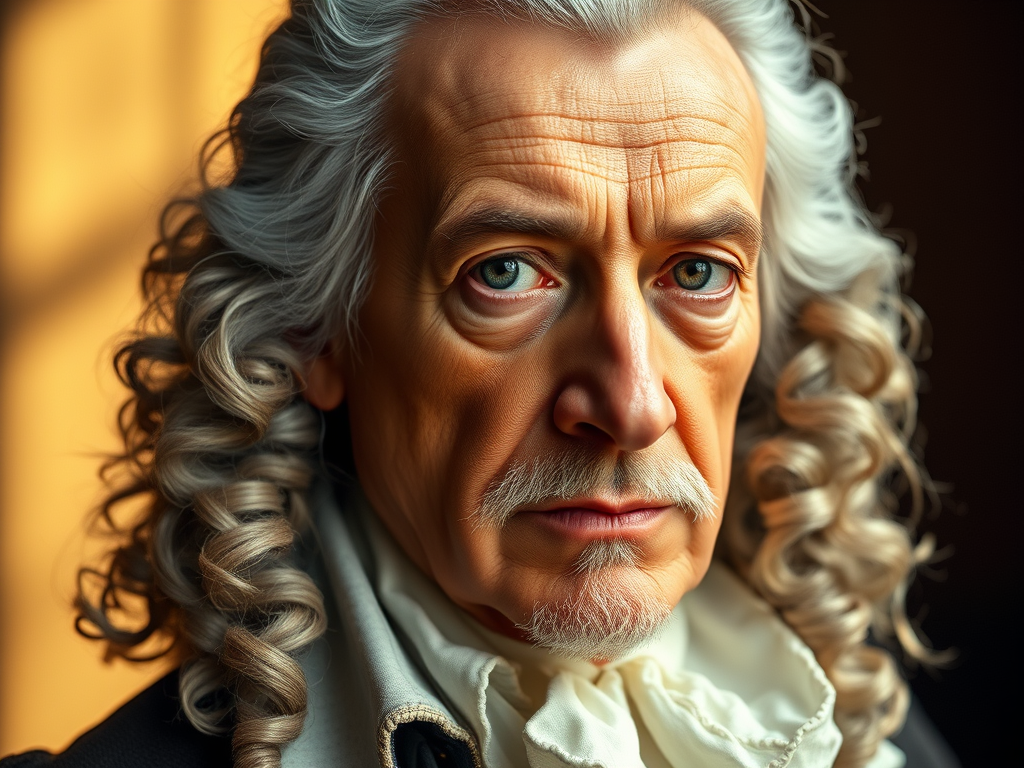
Voltaire died in 1778, but his ideas are immortal. In a world still marked by fanaticism and inequality, his phrases sound like a call to action.
How about keeping this flame alive? Visit Messages that Inspire for more thought-provoking reflections. And if you want to delve deeper into his story, explore Voltaire’s complete biography at the Wikipedia.
Remember: as he himself said, “It’s not enough to win the wisdom, ”you have to use it.”
Frequently Asked Questions
| QUESTIONS | ANSWERS |
|---|---|
| Was Voltaire an atheist? | No. He criticized organized religions, but he believed in a “watchmaker God” who created the universe and then let it run according to natural laws. |
| Who was your greatest enemy? | The Catholic Church and the absolutist monarchy, which censored his works and persecuted him. |
| Did he really say that famous quote about freedom of speech? | The phrase is a summary of his ideas, popularized by the writer Evelyn Beatrice Hall in 1906. |
| Why did he change his name? | “Voltaire” was an anagram of “Arouet le Jeune” (A.ROUET.L.J) and a way for him to reinvent himself after his imprisonment. |
| Where can I read his works today? | Candido and the Philosophical Dictionary are available for free in the public domain. |
| Did he influence the French Revolution? | Yes! His works were cited by revolutionaries such as Robespierre, although he preferred peaceful reforms. |
| What was his view on education? | He believed that education should liberate minds, not indoctrinate them. |
| Did he have any children? | There are no official records, but there is speculation about a secret relationship with his niece, Madame Denis. |