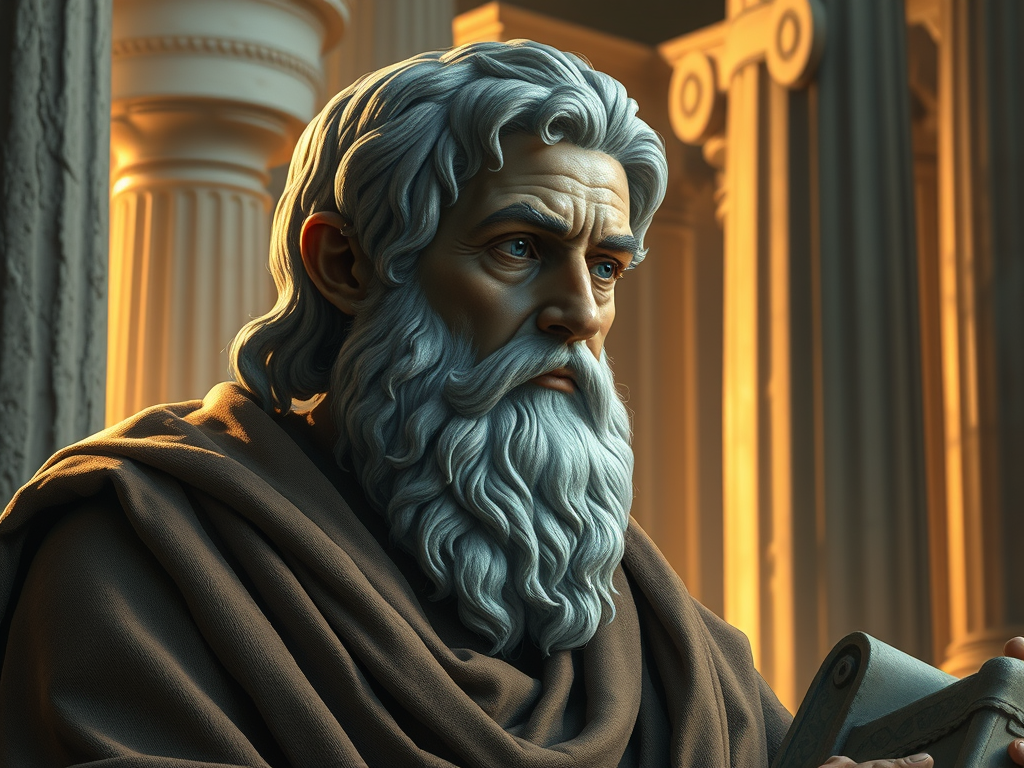
Aristotle and the Wisdom that Transcends Time: Aristotle, a Greek philosopher and one of the greatest thinkers in history, was a milestone in the evolution of human thought.
He profoundly influenced fields such as philosophy, science, ethics, politics, logic, and even the arts.
Born in Stagira, Macedonia, around 384 B.C., Aristotle was a student of Plato at the Academy in Athens, where he distinguished himself for his analytical thinking.
Later, he became Alexander the Great's mentor, imparting philosophical and practical principles that influenced his style of government.
Aristotle's ideas resonate as timeless wisdom, challenging and inspiring generations to explore profound questions about virtue, the purpose and meaning of life.
He wrote over 200 treatises, many of which have been preserved and continue to be studied today as the basis for various disciplines.
20 Inspirational Quotes from Aristotle
“Excellence is a habit, not an act.”
- Aristotle, Nicomachean Ethics (c. 350 BC).
“Education is the ornament of prosperity and the refuge in adversity.”
- Aristotle, Politics (c. 340 BC).
“Friendship is one soul in two bodies.”
- Aristotle, Nicomachean Ethics (c. 350 BC).
“Enjoying your work makes it better.”
- Aristotle, “Metaphysics” (c. 350 BC).
“Those who are happy also share their happiness.”
- Aristotle, Nicomachean Ethics (c. 350 BC).
“Greatness lies not in possessing wealth, but in finding happiness in simplicity.”
- Aristotle, Politics (c. 340 BC).
“Man is by nature a political animal.”
- Aristotle, Politics (c. 340 BC).
“Learning is the greatest of all pleasures.”
- Aristotle, “Metaphysics” (c. 350 BC).
“Courage is the foremost of human qualities because it ensures all the others.”
- Aristotle, Nicomachean Ethics (c. 350 BC).
“The ignorant assert, the wise doubt, the sensible reflect.”
- Aristotle, “Metaphysics” (c. 350 BC).
“The purpose of art is to give form to the invisible.”
- Aristotle, Poetics (c. 335 BC).
“Virtue lies in the middle ground.”
- Aristotle, Nicomachean Ethics (c. 350 BC).
“Knowing yourself is the beginning of all wisdom.”
- Aristotle, Nicomachean Ethics (c. 350 BC).
“The soul never thinks without an image.”
- Aristotle, “De Anima” (c. 350 BC).
“Truth is the supreme measure of man.”
- Aristotle, “Metaphysics” (c. 350 BC).
“Young people are easily deceived because they are quick to hope.”
- Aristotle, “Rhetoric” (c. 330 BC).
“Happiness depends on ourselves.”
- Aristotle, Nicomachean Ethics (c. 350 BC).
“The educated man differs from the uneducated as much as the living differ from the dead.”
- Aristotle, Politics (c. 340 BC).
“Excellence is not an act, but a habit.”
- Aristotle, Nicomachean Ethics (c. 350 BC).
“He who conquers others is strong; he who conquers himself is powerful.”
- Aristotle, Nicomachean Ethics (c. 350 BC).
Conclusion: Aristotle and Wisdom that Transcends Time
Aristotle's wisdom is a beacon that lights our way. His words transcend time, challenging us to reflect on our values and choices. May these phrases be inspiration for your journey.
Did you like these inspirational messages? Visit messagesthatinspire.com.br for more transformative reflections. Also explore the collection of classic quotes at Wikipedia on Aristotle.

Frequently Asked Questions
Who was Aristotle?
Aristotle was a Greek philosopher of the classical period, a student of Plato, and mentor to Alexander the Great.
What are Aristotle's main works?
“Nicomachean Ethics,” “Metaphysics,” “Poetics,” “Politics,” and “Rhetoric.”.
QWhat was Aristotle's main contribution?
He laid the foundations for various sciences, such as biology, logic, and political philosophy.
What does “virtue lies in the middle ground” mean?
It refers to the idea that virtue lies in the balance between excesses and deficiencies.
Did Aristotle influence other areas?
Yes, such as astronomy, medicine, zoology, and ethics.
Where was Aristotle born?
He was born in Estagira, a city in Macedonia.
What was Aristotle's relationship with Alexander the Great?
He was Alexander the Great's mentor and tutor during his youth.
Where can Aristotle's works be found today?
His works are available in libraries, annotated editions, and reliable online sources.