

The Crossroads of the Dreams: There are moments in life when we find ourselves at a crossroads. Choices that seem simple at first glance, but that have the power to completely reshape our destiny.
This is a story about those choices, about hope in dark times and on the human capacity to turn adversity into opportunity.
An inspiring journey that echoes the values of change and perseverance that we so strongly recognize in the messages of Barack Obama, but it also invites us to look within and discover our own ability to make a difference.
“Change won’t come if we wait for someone else or another moment. We are the ones we’ve been waiting for. We are the change we seek.”
Chapter 1: The Awakening
Michael Carter never imagined that his 40th birthday would begin with a letter of resignation.
Twenty-two years working for the same construction company in Chicago, rising from a simple laborer to a project manager, only to end up like this: with a white envelope on his desk one cold autumn morning.
“Corporate restructuring,” the document read. Cold words that failed to capture the weight of two decades of loyalty cast aside in the name of quarterly profits.
The city he had helped build now seemed to stare at him indifferently through the windows of the empty office. The skyline of skyscrapers—some of which he himself had overseen—now seemed like monuments to his insignificance.
“What’s the value of a lifetime of work when it can all come to an end with a single company memo?” he thought as he cleared out his desk.
When he got home to his small apartment on the south side of Chicago, Michael found his 19-year-old daughter, Maya, sitting at the kitchen table.
Partial scholarships weren't enough, and the letter from the university that she held, with tears in her eyes, announced a tuition increase for the coming semester.
“I’m going to take a leave of absence from school, Dad. I can work for a year and come back later.”
Michael felt the weight of the world on his shoulders. He had promised his late wife, Diane, that he would make sure Maya had the opportunities they had never had. It was the dream theirs: to see the first member of their family graduate from college.
That night, lying in bed, Michael remembered the words his father had always repeated before he died on the assembly line at the old factory: “Son, life will knock you down a thousand times. Character is revealed not in how we stand, but in how we choose to get back up.”
“It’s easier to raise strong children than to fix broken adults.”
Chapter 2: The Crossroads
Three weeks later, Michael was still unemployed. His savings were dwindling, and the résumés he’d sent out seemed to vanish into a digital void. That’s when he received two phone calls on the same day.
The first came from Richard Maxwell, a former colleague who was now working for a major real estate developer. He offered a position with a generous salary—almost double what Michael had been earning before.
The job involved overseeing the demolition and reconstruction of a historic block in Bronzeville, a predominantly Black neighborhood that was struggling with gentrification.
“It’s just progress, Mike. Someone’s going to do it anyway, so it’s better if it’s someone who at least cares a little about people,” Richard argued.
The second phone call came from Elijah Washington, an old childhood friend. Elijah ran a small community center in Woodlawn, another underprivileged neighborhood. The center was about to close its doors due to a lack of structural maintenance.
“I need someone who knows about construction, Mike. We don’t have any money, but we have volunteers who are willing to learn. We could save this place together.”
That night, Michael sat at the kitchen table with two proposals before him. One would guarantee immediate financial stability and Maya’s academic future. The other meant uncertainty, unpaid work, and an uncertain future.
“We don’t ask if our dreams are too big, but rather if they’re big enough.”



Chapter 3: The Road Less Traveled
To Maya's surprise, Michael chose the community center. His decision was not well received.
“You’re throwing away our chance at stability! How am I supposed to go back to college? How are we going to pay the bills?” Maya shouted, slamming her bedroom door.
The first few weeks at the center were challenging. The nearly eighty-year-old building was in much worse condition than Elijah had described.
The volunteers were mainly teenagers from the after-school program—energetic, but with no construction experience whatsoever.
Among them was Marcus, a 17-year-old with a history of disciplinary problems and a defensive attitude that pushed away anyone who tried to get close to him.
The boy had a natural talent for manual labor, but he refused to follow instructions or work as part of a team.
“You don’t even live here. Why do you care?” Marcus challenged Michael one day, when Michael asked him to redo some poorly done masonry work.
“I’ve lived my whole life in neighborhoods like this one. I’ve seen places that are important to the community close down one after another.
”Every center, every library, every safe space that closes is yet another door of opportunity that closes for young people like you," Michael replied calmly, continuing his work without waiting for a response.
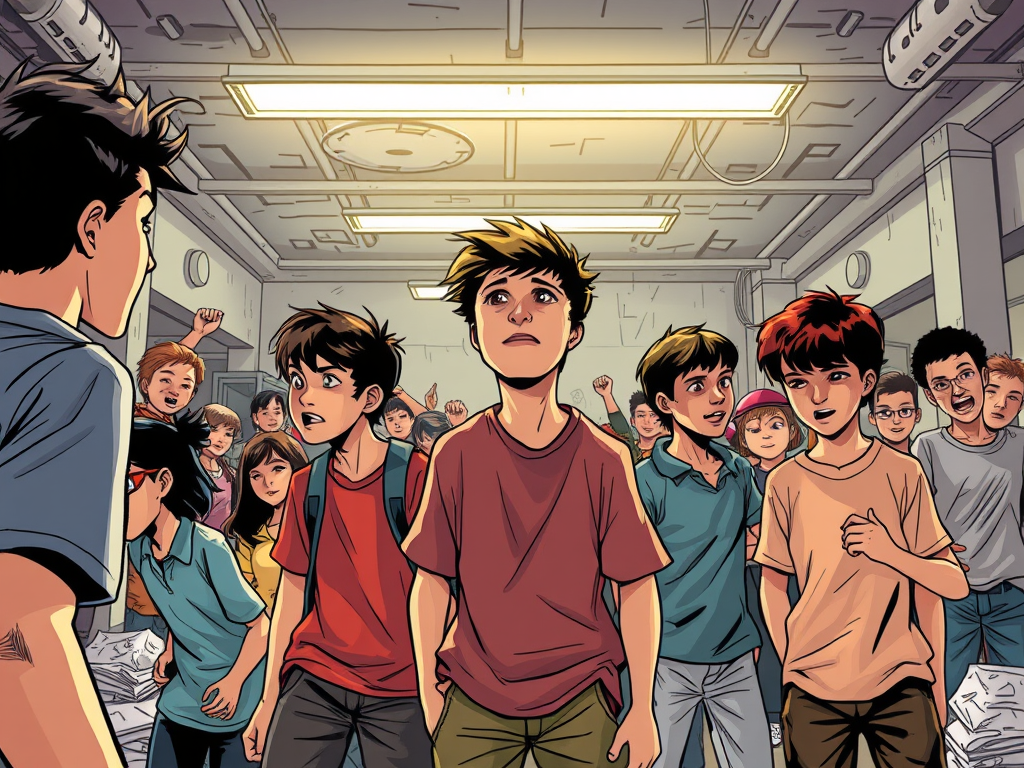
To his surprise, Marcus stayed by his side, watching silently for hours while Michael repaired a section of old pipes. The next day, the young man returned with two friends, ready to learn.
“The true measure of our character lies in how we treat those who can do nothing for us.”
Chapter 4: Seeds of Change
Three months had passed. Michael's savings were almost gone. Maya had found a part-time job at a bookstore, but she was still hurt by her father's decision.
She would often walk right past him when she got home, exchanging only the bare minimum of words.
Progress at the community center was slow but noticeable. What began as a disorganized group of teenagers gradually evolved into a cohesive team.
Michael realized that he was teaching more than just construction techniques—he was imparting lessons about teamwork, responsibility, and pride in one's work.
Marcus, in particular, surprised everyone. The troubled young man turned out to be a natural leader, organizing the others and even staying after hours to finish important projects.
One rainy afternoon, while they were working on the gym's roof, Marcus shared his story with Michael.
Raised by his grandmother after his mother was arrested for drug-related crimes, he was on the verge of dropping out of school. The center was the only place where he felt valued.
“Before you arrived, this place was about to close down. It was going to be just another abandoned building in the neighborhood—it probably would have been taken over by drug dealers,” said Marcus. “You have no idea how many of us have nowhere else to go after school but here.”
That same night, Michael received a message from Richard Maxwell: the job offer was still on the table, along with a substantial signing bonus. Richard needed an answer within 24 hours.
When he arrived home, exhausted and worried, Michael found Maya waiting for him in the living room. To his surprise, she wasn't alone. Beside her was Professor Jenkins, his academic advisor at the university.
“Maya told me what you’re doing at the community center,” said Professor Jenkins. “Our college has a community scholarship program for students whose parents are involved in meaningful social work. I’d like Maya to apply.”
For the first time in months, Michael saw a genuine smile on his daughter's face.
“Hope is not blind optimism. It is believing that something better lies ahead and having the courage to fight for it.”
Chapter 5: Storm on the Horizon
Just when it seemed that things were finally looking up, Michael received the devastating news: the city had denied the extension of the community center’s operating license, citing structural concerns.
They had only 60 days to make significant renovations that would cost far more than the available funds, or the center would be closed permanently.
That same week, Michael discovered the real reason behind the pressure to close the center: Richard Maxwell’s own real estate development company had acquired options to purchase several properties on the block.
The plan was to turn the entire area into a luxury apartment complex.
“Do you understand now why I wanted you on our team?” Richard confessed during an unexpected meeting at a café. “You know these people; they trust you. You could have made the transition easier and minimized resistance.”
“You mean, it could have helped drive an entire community from their homes,” Michael retorted.
“It’s just urban development, Mike. Don’t be naive. Downtown is going to close down anyway.”
That night, Michael couldn't sleep. Richard's words echoed in his mind. Maybe he was right. Maybe this was a battle he couldn't win.
It was Maya who found him the next morning, lost in thought at the kitchen table.
“Do you remember what you always used to tell me when I wanted to give up on something difficult?” she asked, pouring him a cup of coffee. “‘The things that are most worthwhile are rarely the easiest.’ Isn’t that what you and Mom always taught me?”
Michael looked up, surprised by his daughter's change in attitude.
“I went downtown yesterday,” Maya continued. “I saw what you’ve built there, Dad. It’s not just walls and roofs. It’s relationships, trust, and hope.”.
”Marcus showed me the plan for a shelter for homeless youth that you're working on. If the center closes, where will these people go?"
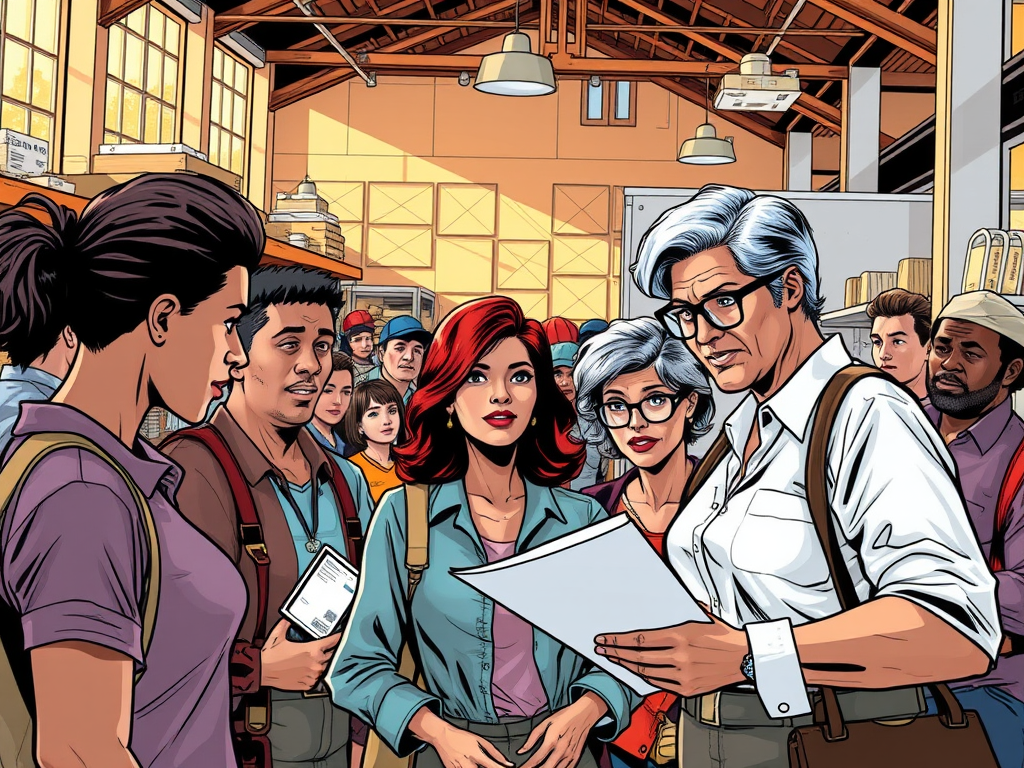
That same afternoon, Michael called an emergency meeting at the community center. To his surprise, the small meeting room was packed—not only with young volunteers, but also with parents, teachers, local business owners, and even a reporter from the community newspaper.
“We can’t compete with billion-dollar corporations,” Michael told the attentive crowd. “But we have something they don’t have: this community. And I believe that, together, we can find a way.”
“Change will come to America not from the top down, but from the bottom up.”
Chapter 6: Convergence
Over the next few weeks, the small community center became a hive of activity. The story of the fight against its closure and gentrification drew attention beyond the neighborhood’s borders.
Volunteers began to show up—architecture students, retirees with construction experience, and former residents who had become successful and wanted to give back.
Maya surprised everyone by organizing an online fundraising campaign that quickly went viral. Local artists held charity auctions. Building materials began to arrive, donated by smaller companies that wanted to associate their brands with the cause.
The turning point came from an unexpected source. One day, while overseeing the structural reinforcement of the main building, Michael was visited by an elegant woman who introduced herself as Evelyn Johnson, the director of social responsibility at a major corporate foundation.
“We are looking for genuine community revitalization projects for our new social investment program,” she explained.
“What you’re doing here—not just preserving a building, but building local capacity and creating real opportunities—is exactly the kind of initiative we want to support.”
The foundation's proposal was ambitious: funding not only to save the center but also to expand its programs, including a vocational training component in construction for young people in the community.
Michael could hardly believe the turn of events. As he showed Evelyn the plans, his eyes met Marcus's, who was supervising a group of volunteers on the other side of the courtyard.
The young man who had once questioned his motives now showed the same dedication that Michael had demonstrated.
That night, when he got home, Michael found a letter from Maya's university. Hesitantly, he opened it, fearing yet another piece of bad news.
Instead, she received confirmation of a full scholarship—not only for Maya, but also an offer for Michael to teach a hands-on course on sustainable construction and community development.
“There is no such thing as a liberal America or a conservative America—there is the United States of America. There is no such thing as a Black America, a White America, a Latino America, or an Asian America—there is the United States of America.”
Conclusion: The Crossroads of Dreams
A year later, the Woodlawn Community Center celebrated its grand reopening. What had once been a dilapidated building had been transformed into a vibrant complex.
This complex housed more than just the original programs. It also included an incubator for small local businesses and a coworking space for entrepreneurs in the neighborhood.
And most importantly: the first class of young apprentices in the construction program was led by Marcus, who is now an assistant instructor.
Michael Carter, standing next to Maya at the opening ceremony, watched with emotion as not only the space but also the people were transformed.
His own journey had taken him from being a despondent professional with no prospects to a respected community leader and college professor. More importantly, his difficult choice had restored something he thought he had lost forever: a sense of purpose.
The crossroads he had faced wasn't just about a job or a building. It was about what kind of world he wanted to help build.
By choosing the harder path, he discovered that true change begins with seemingly small decisions made by ordinary people at critical moments.
In the audience, Richard Maxwell watched the ceremony with a pensive expression. After the speeches, he approached Michael.
“You were right, Mike. I was on the wrong side of this issue,” he admitted, holding out his hand. “My company is reviewing its projects in the area. We’re interested in discussing development models that don’t displace existing communities.”
Michael Carter's journey reminds us that our choices have the power to create ripples that extend far beyond our own lives.
That sometimes, when we’re at rock bottom, that’s precisely the moment to look up and realize that perhaps we were put there not to give in, but to build a more solid foundation.
As has often been said, the true test of a person's character lies not in how they handle success, but in how they respond to adversity.
And perhaps the most important lesson: that we are never too small to make a difference, that it is never too late to choose the path of hope, and that the change we seek in the world often begins with the courage to change the course of our own lives.
Did you enjoy this inspiring story? Keep exploring life-changing messages on the Blog: Messages that Inspire
Frequently Asked Questions
| Question | Answer |
|---|---|
| What is the main message of this story? | The story emphasizes that our individual choices, even in times of crisis, can have a transformative impact not only on our own lives but on entire communities. |
| Why did Michael choose the hardest path? | Michael recognized that true value lies not only in financial security, but in creating a meaningful legacy and honoring his deepest values. |
| Is the story based on real events? | This is a work of original fiction, but it is inspired by the themes of hope, community, and social change that Barack Obama frequently addresses in his speeches and books. |
| What does the character Marcus represent in the story? | Marcus embodies the transformative potential that exists in young people who are often marginalized when they are given the right opportunities and guidance. |
| How does the story reflect the values associated with Barack Obama? | The narrative incorporates recurring themes in Obama's speeches: the importance of community organizing, the power of hope in the face of adversity, and the belief that meaningful change often comes from the bottom up. |
| What is the meaning of “crossroads” in the title? | A crossroads represents the decisive moments in our lives when we must choose between the seemingly safe and easy path and the path that aligns with our deepest values. |
| How has Maya's character developed throughout the story? | Maya has gone from being a young woman focused solely on her own journey to someone who understands the value of community service and sacrifice for the greater good. |
| Does the story suggest a specific political stance? | Rather than promoting a specific political agenda, the story celebrates universal values such as community, compassion, perseverance, and a belief in the potential for positive change. |


