
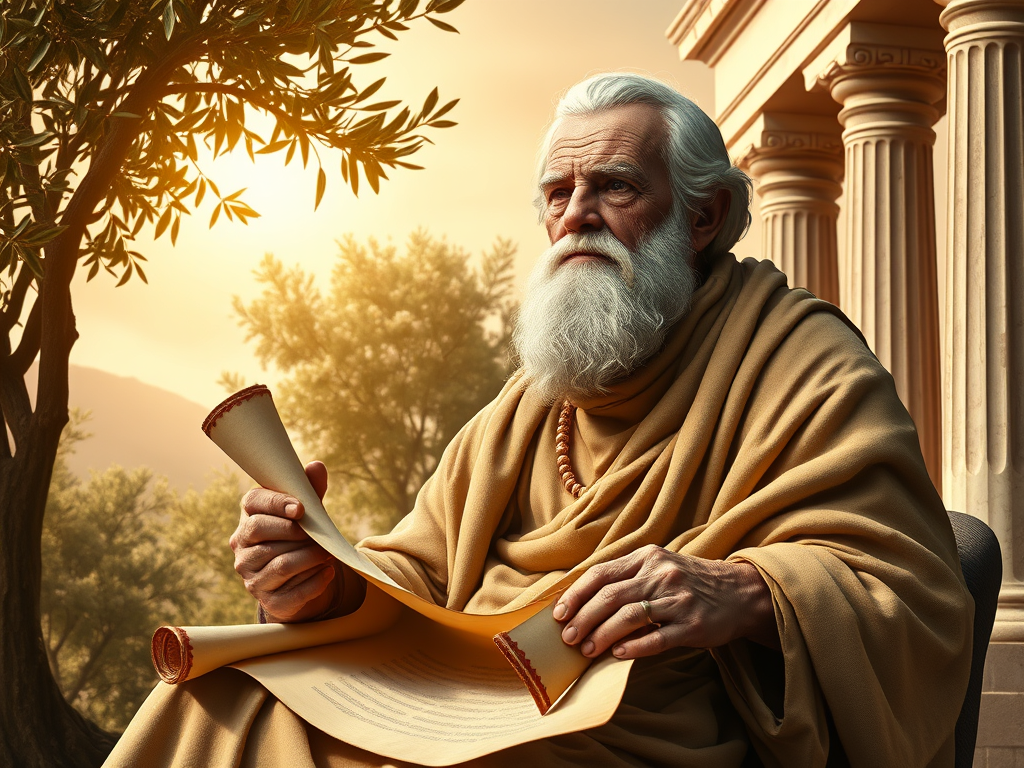
Quotes from Homer: Timeless Wisdom from the Poet Who Shaped Western Civilization
Quotes from Homer: Phrases from wisdom Eternal words continue to echo through the millennia, especially those of the legendary Homer, the Greek poet who lived around the eighth century BC in the Ionian region, now the coast of Turkey.
Although shrouded in mystery – some scholars even question whether it was a single person or a collective oral tradition – Homer is considered the author of the epics “Iliad” and “Odyssey,” fundamental works of Western literature.
Died on an uncertain date, possibly on the island of Chios, this blind poet (according to tradition) created characters and situations that continue to shape our understanding of the human condition.
Have you ever wondered how words written almost three thousand years ago can still touch our souls so deeply? How is it possible that ancient verses seem to speak directly to the challenges we face today? In this article, we will explore the Quotes from Homer who transcended time and space to continue inspiring generations.
The Immortal Phrases of Homer
Homer gave us countless reflections on courage, honor, love, destiny, and the very essence of humanity. His works, especially the Iliad and the Odyssey, composed around the eighth century BC, are inexhaustible sources of wisdom. Below, we have compiled more than 60 of his most impactful quotes:

| Numbering | Sentence | Work |
|---|---|---|
| 1 | “The gods do not give all their gifts to all men.” | The Odyssey, Book VIII |
| 2 | “Of all evils, which is the worst? Cowardice.” | Iliad, Book II |
| 3 | “There is nothing more miserable than a man, among all beings that breathe and move on earth.” | Iliad, Book XVII |
| 4 | “Work is light when many share the effort.” | Iliad, Book XII |
| 5 | “Even strength needs wisdom to be used well.” | The Odyssey, Book III |
| 6 | “Sleep is the brother of death.” | Iliad, Book XIV |
| 7 | “Often, the gods do not reveal their full intentions immediately.” | The Odyssey, Canto X |
| 8 | “Bad advice is more harmful to the person who gives it.” | Iliad, Book XVIII |
| 9 | “Wine can reveal what is in a man's heart.” | Odyssey, Canto XIV |
| 10 | “Men always blame the gods for their misfortunes, while it is they themselves who, through their folly, bring misfortune upon themselves beyond their destiny.” | The Odyssey, Book I |
| 11 | “Nothing is sweeter than the earth Christmas and parents, even when living in an opulent home, in a foreign land, far from their own.” | Odyssey, Canto IX |
| 12 | “A doctor is worth many other men.” | Iliad, Book XI |
| 13 | “Even the gods disguise themselves as foreigners from distant lands to observe the insolence and justice of men.” | Odyssey, Canto XVII |
| 14 | “Two men together have more strength to plan and act.” | Iliad, Book X |
| 15 | “From Zeus come all foreigners and beggars, and small gifts are dear to them.” | Odyssey, Canto VI |
| 16 | “Nothing fuels the bravery of men as much as seeing their leader on the front line.” | Iliad, Book XIX |
| 17 | “The minds of men on earth are in accordance with the day brought to them by the father of men and gods.” | Odyssey, Canto XVIII |
| 18 | “As the generations of leaves, so are those of men.” | Iliad, Book VI |
| 19 | “Even a fool learns from experience.” | Iliad, Book XVII |
| 20 | “Men tire more easily of pleasure than of work.” | Iliad, Book XIII |
| 21 | “Friendship should not go beyond what is fair.” | The Odyssey, Canto XV |
| 22 | “The gods do not give men all blessings: neither beauty, nor intelligence, nor eloquence.” | The Odyssey, Book VIII |
| 23 | “No mortal can blame the immortals.” | The Odyssey, Book I |
| 24 | “Man is the saddest creature that breathes and crawls on earth.” | Iliad, Book XVII |
| 25 | “It is better to be king in Ithaca than immortal in a strange land.” | The Odyssey, Book V |
| 26 | “The heart can suffer greatly, but there is a limit to human pain.” | Odyssey, Canto IV |
| 27 | “Excellence is a divine gift.” | Iliad, Book III |
| 28 | “Even fools learn from experience.” | Iliad, Canto XX |
| 29 | “No man will send me to Hades before the appointed time.” | Iliad, Book VI |
| 30 | “Men need rest after work.” | Odyssey, Canto XIV |
| 31 | “It is better to live poor, in the sunlight, than to reign over all the dead in the shadows.” | Odyssey, Canto XI |
| 32 | “The gods do not give mortals everything at once.” | Iliad, Book IV |
| 33 | “What kind of word escaped from between your teeth?” | Iliad, Book IV |
| 34 | “Of all the beings that breathe and crawl on earth, nothing is weaker than man.” | Odyssey, Canto XVIII |
| 35 | “Even a foreigner deserves justice.” | Odyssey, Canto XIV |
| 36 | “Men have hearts that can endure when necessity compels them.” | Iliad, Book XXIV |
| 37 | “The gods bind the feet of those who do evil.” | Iliad, Book XIX |
| 38 | “It is a pleasure to hear a bard like this, with a voice like that of the gods.” | Odyssey, Canto IX |
| 39 | “It would be shameful to stay here too long without results.” | Iliad, Book II |
| 40 | “It is better to live in poverty but in the light of the sun than in opulence but in darkness.” | Odyssey, Canto XI |
| 41 | “The brave man has a better chance of salvation than the coward.” | Iliad, Book XXI |
| 42 | “Even a fool recognizes the truth when he sees it.” | Odyssey, Book VII |
| 43 | “He who flees gains neither glory nor strength.” | Iliad, Book V |
| 44 | “The gods do not reveal everything to mortals from the outset.” | The Odyssey, Book III |
| 45 | “The glory of man comes from his feet and hands.” | The Odyssey, Book VIII |
| 46 | “It is not good to keep lamenting endlessly.” | Iliad, Book XXIV |
| 47 | “Even the gods themselves may bow before prayers.” | Iliad, Book IX |
| 48 | “Sleep, however sweet it may be, can become harmful in excess.” | The Odyssey, Canto XV |
| 49 | “No one has ever defeated Zeus.” | Iliad, Book XII |
| 50 | “Persuasion is more valuable than force.” | Iliad, Book I |
| 51 | “The gods do not honor all men equally.” | Iliad, Book XIII |
| 52 | “It is good to respect guests while they are with us and honor them when they leave.” | The Odyssey, Canto XV |
| 53 | “Necessity is a harsh teacher.” | Iliad, Book VI |
| 54 | “Both the coward and the brave meet death.” | Iliad, Book VI |
| 55 | “It is shameful to stay too long and return empty-handed.” | Iliad, Book II |
| 56 | “Wise advice is always welcome.” | Iliad, Book IX |
| 57 | “The fate of all men is to die.” | The Odyssey, Book III |
| 58 | “Men always need each other.” | Iliad, Book X |
| 59 | “It's better to die once than to suffer your whole life.” | The Odyssey, Book V |
| 60 | “A guest should respect their host and leave when asked.” | Odyssey, Canto XVII |
| 61 | “A man must fight for what he believes in.” | Iliad, Book XII |
| 62 | “When two walk together, one sees before the other.” | Iliad, Book X |
“Work is light when many share the effort.” This quote from Homer's Iliad sums up the spirit of cooperation that permeates his entire work, reminding us that humanity's greatest achievements come from unity.
“As the generations of leaves, so are those of men.” With this powerful metaphor from the Iliad, Homer reminds us of the cyclical and ephemeral nature of human life, teaching us humility in the face of time.
Conclusion
The quotes from Homer continue to resonate across the millennia because they touch on fundamental truths of human experience.
His reflections on courage, honor, love, and destiny transcend cultural and temporal barriers, offering wisdom for facing the challenges of modern life.
These ancient words remind us that, despite all the technological and social changes, the essence of the human condition remains the same.
We continue to face moral dilemmas, seek meaning in our lives, and struggle to overcome adversity—just like Homer's heroes.
Would you like to continue exploring inspiring messages from humanity's greatest thinkers? Visit our blog. Messages That Inspire for more content that will lift your spirits and expand your mind.
To deepen your knowledge of Homer and his work, we recommend visiting the Wikipedia page on Homer, which provides detailed information about his life and legacy.
FAQ about Homer
| Question | Answer |
|---|---|
| Did Homer really exist? | There is academic debate about this. Some scholars believe that Homer was a real person, while others suggest that the name represents a collective oral tradition of bards who told these stories. |
| When did Homer live? | It is estimated that Homer lived around the 8th century BC, during the period known as Archaic Greece. |
| Was Homer really blind? | Tradition describes him as blind, but there is no conclusive historical evidence for this. This characteristic may be symbolic, representing the poet's inner vision. |
| What are Homer's major works? | The two main works attributed to Homer are the Iliad and the Odyssey, considered to be the foundations of Western literature. |
| What is the Iliad about? | The Iliad narrates events from the last year of the Trojan War, focusing mainly on the wrath of the warrior Achilles and its consequences. |
| What is the Odyssey about? | The Odyssey recounts the journey of the hero Ulysses (Odysseus) back to his homeland, Ithaca, after the Trojan War, a journey that lasted ten years. |
| Did Homer write his works or were they transmitted orally? | Initially, it is believed that the stories were passed down orally for generations before being recorded in writing, possibly in the eighth century BC. |
| How important is Homer to Western culture? | Homer is considered the founder of Western literary tradition. His works profoundly influenced Greek religion, art, philosophy, and literature, and consequently, all of Western culture. |







 Português do Brasil
  English
  Español
  Français