
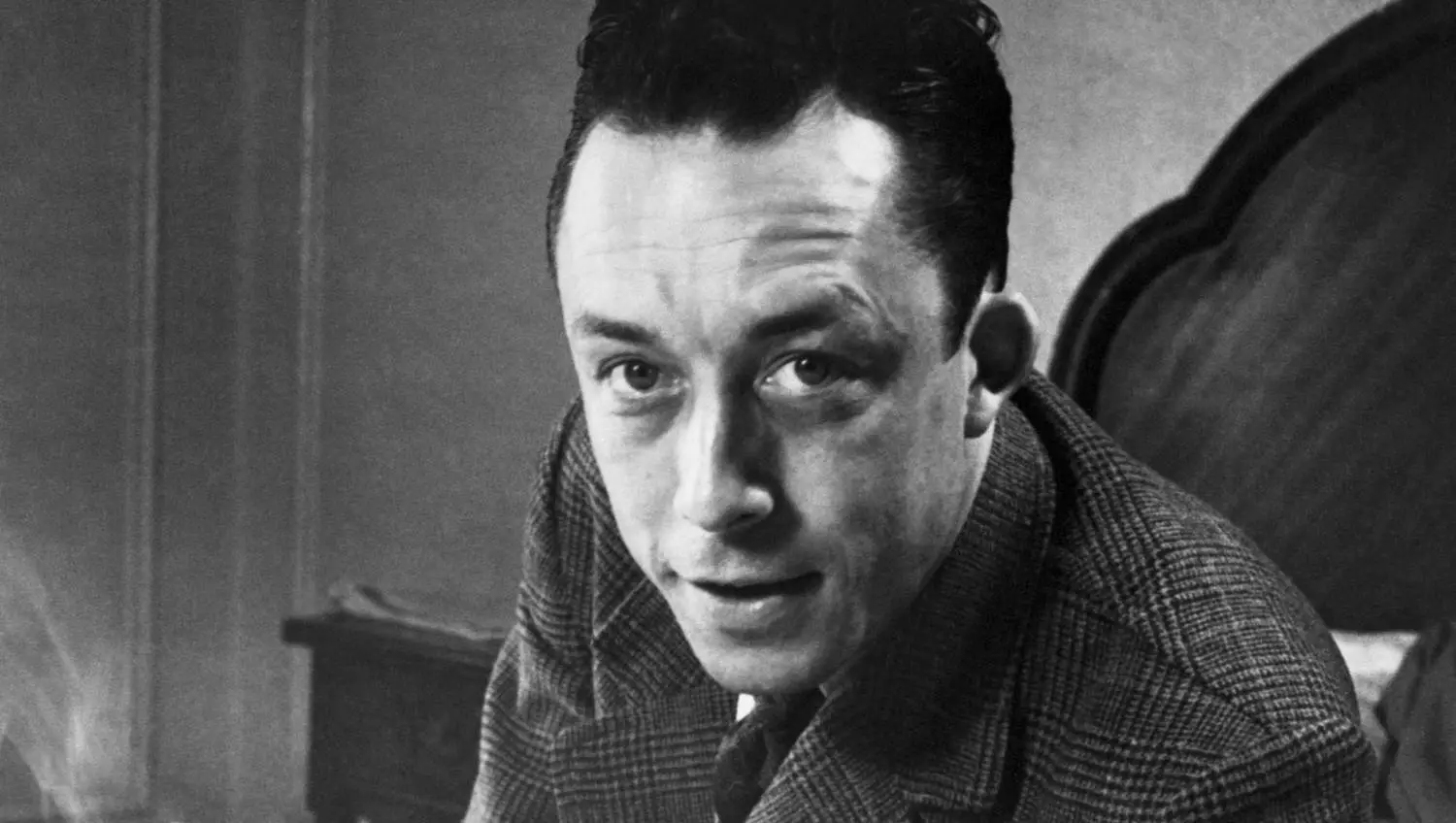
Quotes by Albert Camus that Awaken Consciousness and Inspire Authentic Living
In a world often steeped in uncertainty and absurdity, the words of Albert Camus ecoam como faróis de lucidez e convite à reflexão.
Born in Mondovi, Algeria, on November 7, 1913, and tragically deceased in Villeblevin, France, on January 4, 1960, Camus was a writer, philosopher, French novelist, playwright, essayist, and journalist.
His work, deeply marked by existentialism and absurdism, reflects the relentless search for meaning in a seemingly chaotic universe.
Phrases de Albert Camus, como as que apresentaremos neste artigo, são mais do que meras palavras; são convites a uma jornada interior, a um despertar da consciência que nos impulsiona a viver de forma mais autêntica e engajada.
Get ready to be inspired and challenged by the reflections of this giant of literature and thought!

Immerse yourself in wisdom Albert Camus' timeless wisdom through these inspiring quotes, organized into tables for easy reading and reflection:
Inspirational Quotes by Albert Camus
| Sentence | Source (if available) |
|---|---|
| “In the middle of winter, I finally learned that within me there was an invincible summer.” | Return to Tipasa, in Summer (1954) |
| “A felicidade nem é fácil nem ligeira. Não é para cegos. Sua cor verdadeira é feita da cor do sofrimento.” | The Myth of Sisyphus (1942) |
| “Autumn is a second spring where every leaf is a flower.” | |
| “Man is the only creature who refuses to be what he is.” | The Rebel (1951) |
| “True generosity toward the future consists in giving everything to the present.” | |
| “Freedom is nothing more than an opportunity to be better.” | |
| “Don’t walk in front of me, I may not follow. Don’t walk behind me, I may not lead. Walk beside me and be my friend.” | |
| “I believe we shouldn't be better than we are.” | The Fall (1956) |
| “Absurdity depends as much on man as it does on the world.” | The Myth of Sisyphus (1942) |
| “Charm is a way of getting the answer ‘yes’ without having asked any clear questions.” | |
| “Não há amor à vida sem desespero da vida.” | The Myth of Sisyphus (1942) |
| “Don't be too ambitious. Don't expect life to give you everything at once. Ask only for what is essential, and you will be pleasantly surprised.” | |
| “The world isn't reasonable, that's all I can say.” | The Foreigner (1942) |
| “O idealismo força a história. O realismo a sofre.” | The Rebel (1951) |
| “To be creative, you must lose your fear of being wrong.” | |
| “I rebel, therefore we exist.” | The Rebel (1951) |
| “What is happiness if not the simple agreement between a man and the life he leads?” | The Foreigner (1942) |
| “You have to be stupid, blind, and selfish to be happy. But you also have to be an idiot to be unhappy.” | The Plague (1947) |
| “Man is the only creature who refuses to be what he is.” | The Rebel (1951) |
| “Suicide is a confession. It is a confession that life has overtaken us, or that we do not understand it.” | The Myth of Sisyphus (1942) |
| “Stupidity always persists.” | The Plague (1947) |
| “Passion for the possible is a romantic trait.” | |
| “The future is the only property you allow slaves to possess.” | Letters to a German friend (1945) |
| “Integrity does not require rules.” | |
| “Man finds himself in his work, and work finds itself in the century.” | The Rebel (1951) |
| “Absurdity is the lucid reason that recognizes its limits.” | The Myth of Sisyphus (1942) |
| “Love is the only passion that admits neither past nor future.” | The Myth of Sisyphus (1942) |
| “Freedom is, first and foremost, a duty to oneself.” | |
| “The principle of life is hope, but hope is a risk worth taking.” | Summer (1954) |
| “Saber se a vida deve ou não ter um sentido não obriga a nenhuma avaliação dogmática, mas unicamente a uma meditação livre.” | The Myth of Sisyphus (1942) |
| “The press is the workshop where opinions are manufactured.” | |
| “Contempt for life, if absurd when one is rich, is ridiculous when one is poor.” | The Myth of Sisyphus (1942) |
| “There is no shame in being happy.” | |
| “Eu não acreditava em Deus e não estava com sede de eternidade.” | The Foreigner (1942) |
| “Silent despair is the worst kind.” | The Fall (1956) |
| “It is always easier to be logical than to be consistent.” | The Rebel (1951) |
| “Stupidity has an ever-triumphant insistence.” | The Plague (1947) |
| “One must imagine Sisyphus happy.” | The Myth of Sisyphus (1942) |
| “My rebellion is metaphysical.” | The Rebel (1951) |
| “Rebellion is the recognition of a limit.” | The Rebel (1951) |
| “The true work of art is always the one that least resembles its model.” | The Rebel (1951) |
| “Genius is intelligence that knows where to stop.” | |
| “The greatness of man lies in his decision to be stronger than his condition.” | The Myth of Sisyphus (1942) |
| “The order of the world is dictated by despair.” | The Myth of Sisyphus (1942) |
| “Despair is calm.” | The Myth of Sisyphus (1942) |
| “A charlatan is someone who believes what they say.” | The Fall (1956) |
| “What is a rebellious man? A man who says no.” | The Rebel (1951) |
| “There is only one truly serious philosophical problem: suicide.” | The Myth of Sisyphus (1942) |
| “Perfect freedom is that of the cave.” | The Rebel (1951) |
| “Beauty is sometimes despair.” | The Myth of Sisyphus (1942) |
| “Hope is the opposite of resignation, but it is not synonymous with happiness.” | The Rebel (1951) |
| “What is a rebellious man? He is a man who always says no.” | The Rebel (1951) |
| “The true passion of the 20th century is servitude.” | The Rebel (1951) |
| “Man is nothing except what he makes of himself.” | Existentialism is a Humanism (Sartre, influenced by Camus) |
| “The slave is the man who must obey orders, and the rebel is the man who gives orders to himself.” | The Rebel (1951) |
| “The artist is the man who transforms his subjective experience into a universal experience.” | The Rebel (1951) |
| “Lucidity is the wound closest to the sun.” | The Myth of Sisyphus (1942) |
| “There is no fate that cannot be overcome by contempt.” | The Myth of Sisyphus (1942) |
| “For a man without blinders, there is no sight more beautiful than an intelligent man fighting against adversity.” | The Myth of Sisyphus (1942) |
| “What is happiness if not the simple development of life?” | The Foreigner (1942) |
| “Great works are often the result of chance.” | |
| “What is a rebellious man? He is a man who always says no.” | The Rebel (1951) |
| “Absurdity is the divorce between the spirit that desires and the world that disappoints.” | The Myth of Sisyphus (1942) |
| “It is through rebellion that man surpasses himself.” | The Rebel (1951) |
| “The present and the future are nothing more than the consequence of the past.” | |
| “The world is beautiful, and outside of it, there is no salvation.” | Wedding (1939) |
| “A man without ethics is a wild animal loose in this world.“ |
Conclusion:
Albert Camus's words are a constant invitation to reflection and action. Through his words, we are confronted with the nature of absurdity, the beauty of rebellion, the importance of freedom, and the relentless search for meaning.
May these quotes inspire you to continue exploring Camus's thinking and to find your own way to live authentically in this world.
Para descobrir mais mensagens inspiradoras e reflexões profundas, convidamos você a visitar o nosso blog: Messages that Inspire.
To deepen your knowledge of Albert Camus's life and work, please visit the Wikipedia page: Albert Camus – Wikipedia.
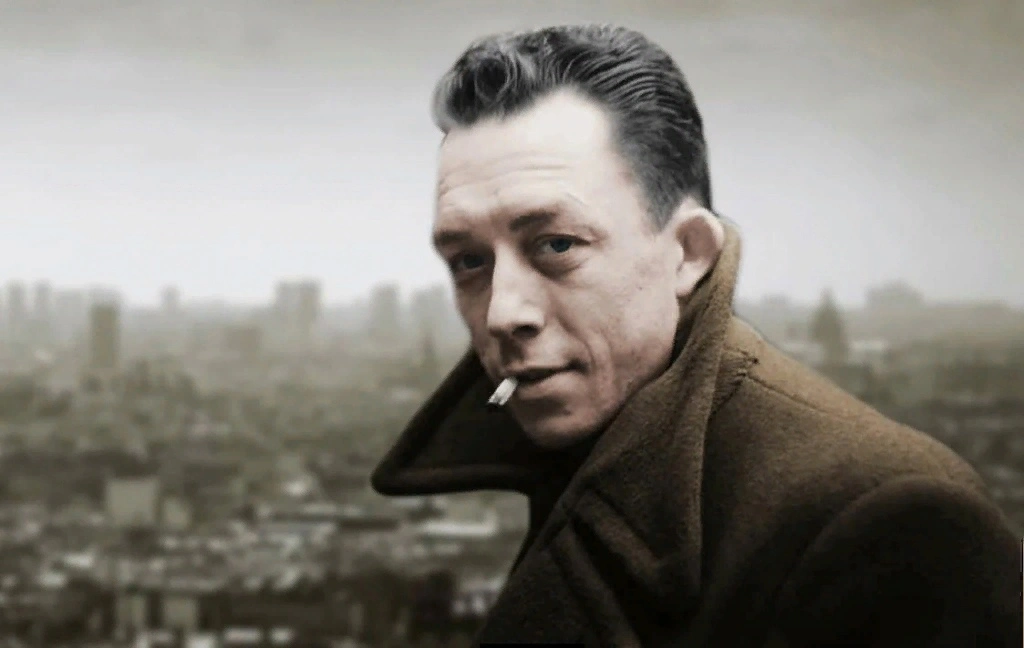
FAQ: Frequently Asked Questions
| Question | Answer |
|---|---|
| What is Albert Camus' nationality? | Albert Camus was French, although he was born in Algeria, which was a French colony at the time. |
| What was the most important award Camus received? | Albert Camus received the Nobel Prize in Literature in 1957, “for his important literary production, which with passionate lucidity illuminates the problems of human consciousness in our time.” |
| What are the main themes addressed in Camus' work? | Os principais temas na obra de Camus incluem o absurdo da existência, a revolta, a liberdade, a solidariedade humana, a morte e a busca por significado em um mundo sem propósito inerente. |
| What are Albert Camus's best-known works? | Some of Camus's best-known works are The Stranger, The Plague, The Myth of Sisyphus, The Rebel, and The Fall. |
| Did Camus consider himself an existentialist? | Although Camus is often associated with existentialism, he himself rejected this classification, preferring to be considered a philosopher of the absurd and of revolt. |
| How important is Camus to philosophy and literature? | Camus is considered one of the most important writers and philosophers of the 20th century. His work has influenced generations with his reflections on the human condition, freedom, and individual responsibility. |
| How did Camus' life experience influence his work? | Camus's experience growing up in French Algeria, witnessing poverty and injustice, and his participation in the French resistance during World War II profoundly shaped his worldview and writing, influencing themes such as solidarity and revolt. |
| What is Albert Camus' legacy? | Camus' legacy is vast and enduring. His work continues to inspire readers around the world to reflect on fundamental existential questions and to seek an authentic and meaningful life, even in the face of absurdity. |



 Português do Brasil
  English
  Español
  Français