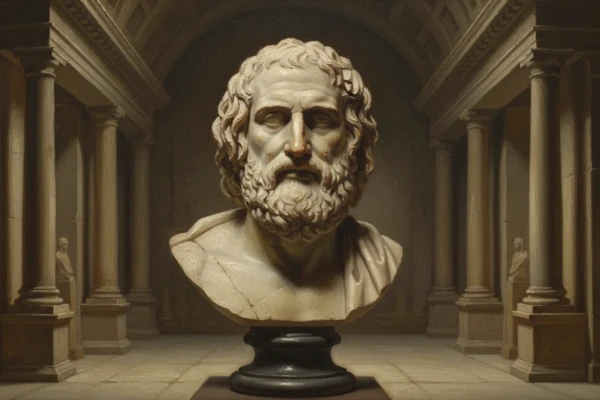

Inspirational Quotes by Benjamin Franklin: Have you ever been inspired by the words of a great thinker? Words that span centuries and continue to resonate with wisdom and relevance?
Today, we're diving into the world of phrases of one of the Founding Fathers of the United States, a multifaceted man who embodied the spirit of the the Age of Enlightenment: Benjamin Franklin.
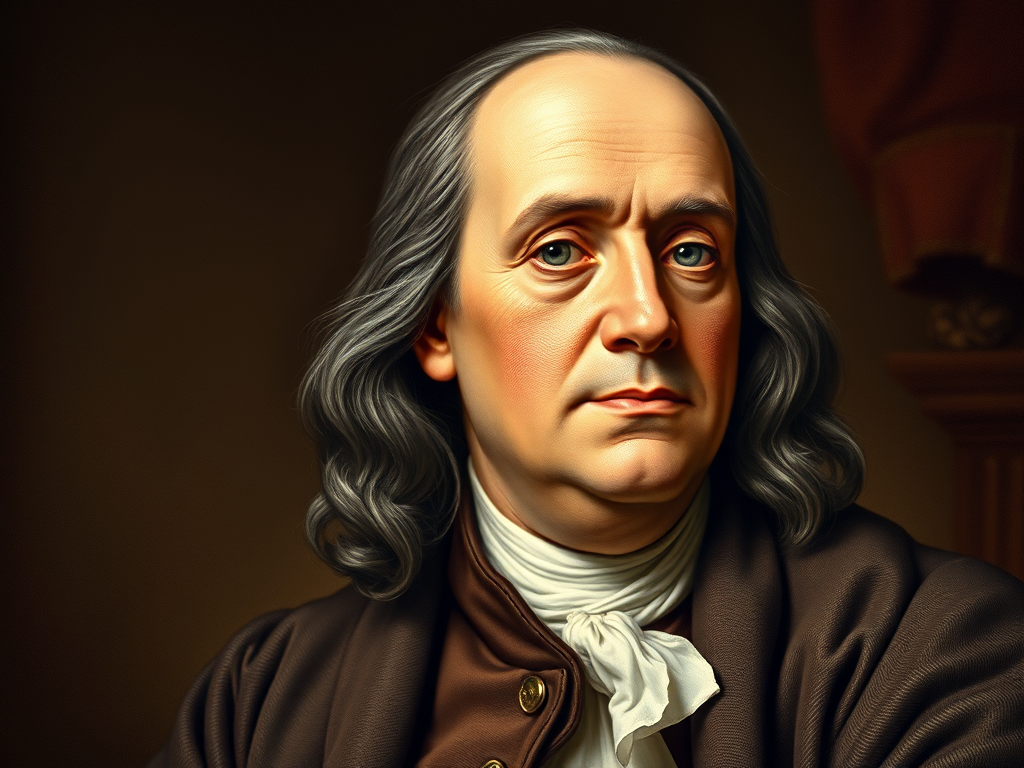
Born in Boston, Massachusetts, on January 17, 1706, and died in Philadelphia, Pennsylvania, on April 17, 1790, Benjamin Franklin was a true polymath—a printer, writer, inventor, statesman, diplomat, and scientist.
He lived in an era of great change, marked by the pursuit of reason, science, and freedom.
Get ready for an inspiring journey through Inspirational Quotes from Benjamin Franklin to Brighten Your Day, where the wisdom of this timeless genius continues to inspire and guide us.
Timeless Wisdom in Quotes by Benjamin Franklin
Throughout his life, Benjamin Franklin left behind a legacy of thoughts and reflections that have become true beacons of wisdom.
Many of his sayings were immortalized in works such as *Poor Richard’s Almanack* (published annually from 1732 to 1758) and in his autobiography.
Below, we present some inspiring quotes by Benjamin Franklin, organized into tables to make them easier to read and reflect on.
| Sentence | Source |
|---|---|
| “A deed is better than a word.” | |
| “Don’t put off until tomorrow what you can do today.” | |
| “Those who are patient will get what they want.” | Poor Richard’s Almanack, 1738 |
| “Be courteous to everyone, sociable with many, close to a few, a friend to one, and an enemy to none.” | |
| “Three people can keep a secret—if two of them are dead.” | Poor Richard’s Almanack, 1735 |
| “Invest in knowledge—it always yields the best returns.” | Poor Richard’s Almanack, 1758 |
| “Laziness moves so slowly that poverty soon catches up with it.” | Poor Richard’s Almanack, 1736 |
| “Those who fear suffering are already suffering what they fear.” | |
| “Anger is never without a reason, but it rarely has a good one.” | Poor Richard’s Almanack, 1737 |
| “It’s better to hurt a friend with the truth than to please him with a lie.” | |
| “The early bird catches the worm.” | Poor Richard’s Almanack, 1735 |
| “Human happiness is generally not so much the result of great strokes of luck—which may occur only rarely—but of the little good things that happen every day.” | |
| “Without freedom of thought, there can be no such thing as wisdom—and no such thing as public freedom without freedom of speech.” | |
| “Tell me, and I’ll forget. Teach me, and I’ll remember. Involve me, and I’ll learn.” | |
| “Beer is proof that God loves us and wants us to be happy.” | |
| “Anyone who believes that money can do anything may well be suspected of doing anything for money.” | |
| “When the candle goes out, all women are equal.” | |
| “A fish and a visitor both start to smell bad after three days.” | Poor Richard’s Almanack, 1736 |
| “There is no greater tyranny than that which is perpetrated under the guise of the law and in the name of justice.” | |
| “Contentment makes the poor rich; dissatisfaction makes the rich poor.” | Poor Richard’s Almanack, 1737 |
| “There are three things that are extremely difficult: steel, diamonds, and knowing oneself.” | |
| “The one who lives in the hope ”dancing without music." | Poor Richard’s Almanack, 1758 |
| “If you want to be loved, love.” | |
| “There is much good in the worst of us and much evil in the best of us, so it is best not to speak of the rest of us.” | |
| “Time lost can never be regained.” | Poor Richard’s Almanack, 1748 |
| “A man who is confident in himself gains more trust from others.” | |
| “Kindness is beauty in its most beautiful form.” | |
| “If you fail to plan, you’re planning to fail.” | |
| “Energy and persistence conquer all things.” | |
| “Be at war with your vices, at peace with your neighbors, and let each new year find you a better man.” | |
| “Anyone who thinks they can live without anyone else is very much mistaken, but anyone who thinks no one can live without them is even more mistaken.” | |
| “Write insults in the sand; carve blessings in marble.” | |
| “It is easier to suppress the first desire than to satisfy all those that follow.” | |
| “He who waits for a dead man’s shoes goes barefoot.” | Poor Richard’s Almanack, 1736 |
| “A kingdom divided by opposing views falls into ruin.” | |
| “Experience is the school of fools.” | Poor Richard’s Almanack, 1750 |
| “Those who fall in love with themselves will have no rivals.” | Poor Richard’s Almanack, 1738 |
| “He who puts off his duty never fulfills it.” | |
| “Nothing in life is certain except death and taxes.” | Letter to Jean-Baptiste Le Roy, 1789 |
| “Those who fear death lose the joy of life.” | |
| “It’s easier to build chimneys in Spain than castles in the air.” | Poor Richard’s Almanack, 1738 |
| “Discretion in conversation is more valuable than eloquence.” | |
| “Pride eats vanity for dinner, contempt is its breakfast, and envy is its supper.” | Poor Richard’s Almanack, 1738 |
| “The best way to get a man to do something is to do him a favor.” | |
| “Those who live in hope die on an empty stomach.” | Poor Richard’s Almanack, 1758 |
| “Treat others the way you would like them to treat you.” | |
| “Those who live by hope die singing.” | Poor Richard’s Almanack, 1758 |
| “Going to bed without dinner makes you fat, and dinner without work makes you thin.” | Poor Richard’s Almanack, 1734 |
| “Those who live in constant happiness are not truly happy.” | |
| “Be humble, for you are made of earth. Be noble, for you are made of stars.” | |
| “Those who are in love are blind and fail to see the flaws, and those who are filled with hatred are blind and fail to see the virtues.” | Poor Richard’s Almanack, 1738 |
| “Those who fall in love with themselves will have no rivals.” | Poor Richard’s Almanack, 1738 |
| “If you lie down with dogs, you’ll wake up with fleas.” | Poor Richard’s Almanack, 1733 |
| “The prudent man anticipates events, the brave man endures them, and the foolish man criticizes them.” | |
| “The ignorant person is not a fool, but the one who refuses to learn is.” | |
| “Those who are afraid to ask are ashamed to learn.” | Poor Richard’s Almanack, 1738 |
| “Don’t let the boat sink while you’re arguing over who should steer it.” | |
| “Those who enjoy themselves too much are bound to die young.” | Poor Richard’s Almanack, 1758 |
| “Those who cannot govern themselves cannot govern others.” | |
| “Those who cannot endure evil will not be able to endure good.” | |
| “God doesn’t help those who don’t help themselves.” | Poor Richard’s Almanack, 1736 |
Conclusion:
Benjamin Franklin's quotes are true gems of wisdom that continue to shine through the ages.
His concise and profound thoughts offer guidance and inspiration for facing life's challenges with wisdom and optimism.
As I reflect on these inspirational quotes, we can find the motivation to pursue our goals and cultivate the virtue and strive for a fuller, more meaningful life.
Did you enjoy these inspiring quotes from Benjamin Franklin? Continue your journey of inspiration and motivation on our blog: Messages That Inspire! Discover more messages and reflections to brighten your day.
To learn more about the life and work of Benjamin Franklin, visit the Wikipedia.
FAQ: Frequently Asked Questions
| Question | Answer |
|---|---|
| 1. Where and when was Benjamin Franklin born? | Benjamin Franklin was born in Boston, Massachusetts, on January 17, 1706. |
| 2. What were Franklin's professions? | Benjamin Franklin was a printer, writer, inventor, statesman, diplomat, and scientist. |
| 3. What is Benjamin Franklin best known for? | He is known for his role as one of the Founding Fathers of the United States, his inventions (such as the lightning rod), and his writings (such as “Poor Richard’s Almanack”). |
| 4. What was Franklin's contribution to the American Revolution? | He was an important diplomat who secured crucial French support for the American cause. He also helped draft the Declaration of Independence. |
| 5. What are some of Franklin's inventions? | Some of his inventions include the lightning rod, bifocal lenses, the Franklin stove, and the flexible catheter. |
| 6. What is Benjamin Franklin's legacy? | Franklin's legacy is vast and influential, spanning science, politics, literature, and moral philosophy. He is remembered as a symbol of self-improvement and civic virtue. |
| 7. What were Franklin's views on education? | Franklin was a strong advocate of practical education and lifelong learning. He founded the Academy of Philadelphia, which later became the University of Pennsylvania. |
| 8. What are some key themes in Franklin's writings? | Key themes include the importance of virtue, self-reliance, hard work, tolerance, and civic-mindedness. |